Amidst ongoing conflict and heightened geopolitical tensions, Iranians are employing creative and often costly methods to maintain contact with loved ones abroad due to stringent internet and phone blocks imposed by authorities. A man operating on the Iran-Turkey border offers a vital service, utilizing two phones – one connected to the Iranian network and another to the Turkish – to facilitate international calls via WhatsApp. This workaround is necessary because direct international calls into Iran are frequently blocked.
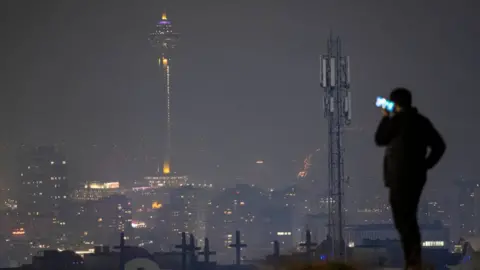
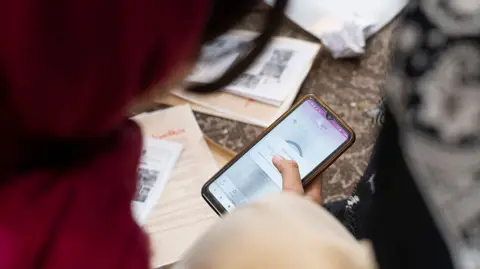
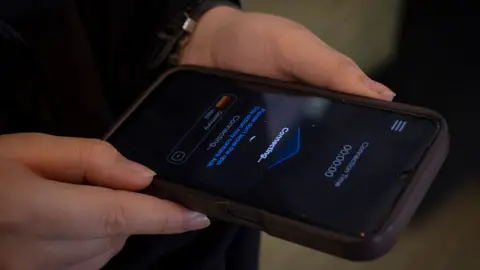
Customers outside Iran connect via WhatsApp to the man’s Turkish phone number. He then uses his Iranian mobile to dial the intended recipient within Iran, holding the phones together to bridge the communication gap. His location on the border allows him simultaneous access to both mobile networks. These services, while essential, are described as expensive and unreliable, with calls often lasting only a few minutes before disconnecting.
The cost for a brief, four- to five-minute call, including money transfer fees, can amount to approximately £28 ($38). Despite the expense, individuals like Ava, who was preparing for her wedding, find the cost justifiable. Her fiance, living in Canada, was unable to travel to Tehran for the ceremony due to the halt in air travel, making these calls crucial for maintaining their connection.
Hamid, a resident of Tehran, has been actively seeking ways to communicate with his wife and relatives overseas. He has resorted to using a virtual private network (VPN) to bypass government restrictions on internet access. However, Hamid notes that the cost of VPNs has significantly increased, with a gigabyte of data now costing around £15 ($20). This is a substantial financial burden, considering the average monthly minimum wage in Iran is approximately $100. He also reports that the connection remains extremely unstable, and any data purchased is lost if the connection is interrupted without refund.
Hamid describes a system where, during brief internet access, he messages contacts to gather phone numbers of their families, relaying news and checking on their well-being. He shares the profound emotional impact of connecting families, stating, “When I call a mother and mention the name of the child who asked about her, the sound of her laughter and excitement changes my whole world.”
In Toronto, Canada, Negar anxiously stays in touch with her family in Iran. They manage short calls to reassure her, despite the ongoing conflict and the dangers they face. Negar expresses the emotional toll, saying, “The worst part of the story is that they are under heavy bombardment, yet they call me and say: ‘We’re fine, don’t worry about us.’ That is what is killing me.”
Shadi, living in Melbourne, Australia, shares similar concerns for her parents in Tehran, whose neighborhood is near critical infrastructure like an oil depot and the Ministry of Defence. They gather information from neighbors to pass on to family abroad when communication is possible. Shadi mentions her father experienced a concerning incident involving “black rain” after a nearby oil depot strike.
Zahra, based in Europe, relies on her brother in Iran using Telegram via a VPN. Extended periods of his offline status cause her significant anxiety. Her brother describes the constant fear due to fighter jets and explosions, as well as the pervasive presence of patrols on the streets, creating a tense environment.
The reliance on technical solutions like VPNs and specialized communication methods makes it challenging for less tech-savvy relatives to stay connected. Pooneh, residing in London, can only communicate with her sister, who is more adept with technology. Pooneh expresses a sense of helplessness, stating, “I can’t call [my family]. Even this simple thing creates a strange feeling, as if nothing is in my control.” She and her sister engage in a reciprocal exchange, with her sister inside Iran relaying family messages and Pooneh providing updates on the war, information censored within Iran.
Fonte: BBC News