

The enduring hostility between the Islamic Republic of Iran and the United States, spanning 47 years, has been fueled by deep-seated mistrust and misperception, ultimately paving the way for the war that began on February 28, 2026. This historical animosity significantly complicates any potential negotiations between the two nations.
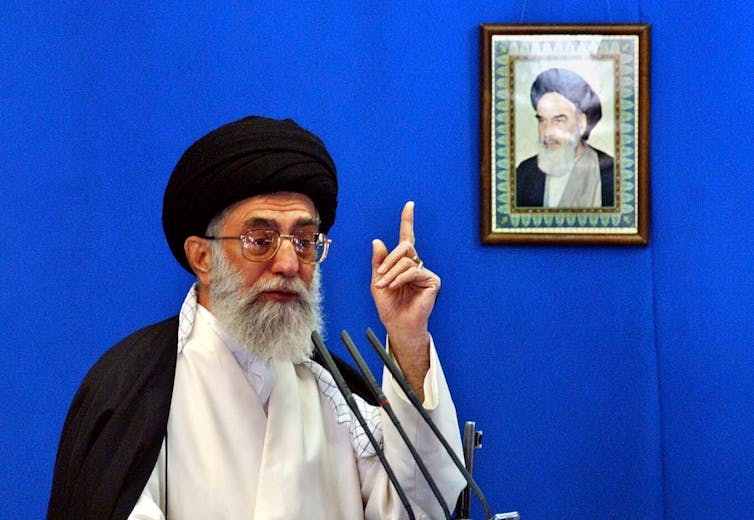
The tone of the relationship has been consistently acrimonious. In 2020, Iran’s supreme leader referred to President Donald Trump as a “clown” who feigned support for the Iranian people while harming them. Conversely, Trump’s special envoy, Steve Witkoff, stated on February 23, 2026, that the president was curious why Iran had not “capitulated,” despite having numerous alternatives.
The conflict that erupted on February 28, 2026, follows a dangerous pattern. Incompatible strategic interests, domestic political pressures on both sides, miscommunication, zero-sum thinking, and repeated diplomatic overreach gradually propelled the relationship toward open conflict.
Rhetoric vs. Reality
When Tehran resisted Trump’s demands, he characterized Iranian leaders as “sick people” who were “mentally ill,” “angry,” and “crazy.” For a more nuanced understanding of Iran, U.S. policymakers could have consulted insights from John W. Limbert, a diplomat with extensive experience in Iranian affairs. In a 2008 study, Limbert outlined principles for successful negotiations with Iranian counterparts, noting that each side often assumes the worst about the other, viewing them as “infinitely devious, hostile, and duplicitous.”
Recent rhetoric has largely ignored such hard-earned wisdom. Instead, discussions about Iran in American leadership and media have often relied on a narrative portraying Middle Eastern leaders as irrational or “lunatic figures.” This narrative has been applied to figures like Ayatollah Ruhollah Khomeini, Saddam Hussein, Moammar Gadhafi, Bashar Assad, and now Ali Khamenei. This portrayal conveniently overlooks factual complexities.
Path to Breakdown
President Trump withdrew the United States from the 2015 nuclear agreement with Iran during his first term. Furthermore, during renewed negotiations in 2025 and 2026, the U.S. bombed Iranian targets twice while talks were still in progress. The negotiations were also indirectly influenced by Israel, with Prime Minister Benjamin Netanyahu skillfully applying political leverage and diplomatic pressure.
Trump frequently violated a basic diplomatic principle by demanding concessions from Iran without reciprocity. Meanwhile, Netanyahu consistently shifted the goalposts, asserting Iran was on the verge of acquiring a nuclear weapon, demanding it cease uranium enrichment on its own soil, calling for the dismantling of its nuclear infrastructure, and advocating for regime change. The extent to which Israeli pressure influenced successive American policies remains a subject for historical debate.
However, responsibility for the breakdown is not solely on Washington and Jerusalem. Iranian leaders significantly contributed to making the conflict intractable. A corrupt, repressive, and economically struggling regime relied on performative anti-American politics for domestic legitimacy. Tehran matched American and Israeli rigidity with its own intransigence and strategic overreach.
Limiting inspections by the International Atomic Energy Agency, failing to provide credible answers about past nuclear activities, constructing secret facilities, and attempting to negotiate from a position of weakness proved disastrous when dealing with an impatient and impulsive American president.
The Unknowns Ahead
If regime change does not occur in Tehran, the two sides will likely find themselves negotiating again once the current hostilities subside. The deep-seated hostility will persist, and diplomatic niceties may become less frequent. However, diplomacy often hinges on interests rather than trust.
Future talks are expected to be transactional rather than transformational. Technical and legal parameters will still require negotiation, and hawks and doves will continue to vie for influence in both capitals. The fundamental principle of bargaining—acquiring leverage before negotiating—will remain unchanged.
Fonte: The Conversation