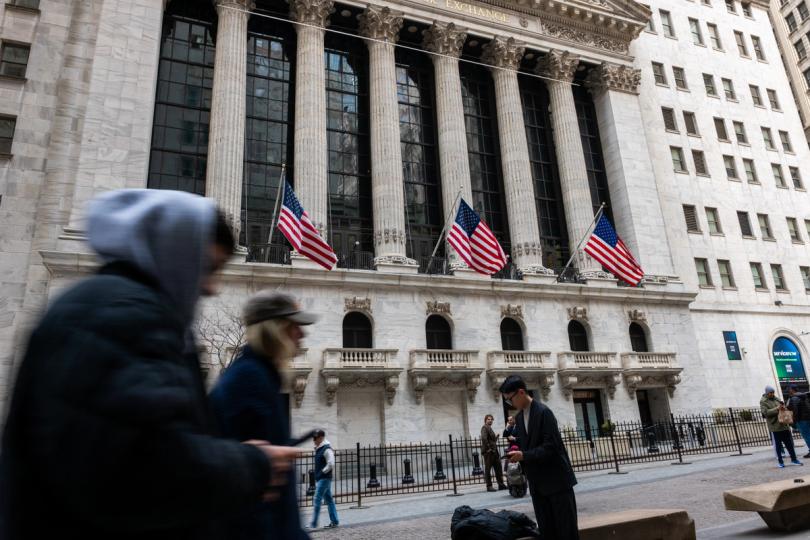
Wall Street is accelerating its efforts to introduce tokenized stocks and enable 24/7 trading, but many institutional investors remain hesitant due to concerns over instant settlement and associated risks.


Tokenization involves representing traditional assets, like stocks, on blockchain networks. This technology promises to modernize market infrastructure, which largely dates back decades, by allowing securities to move and settle instantly and potentially facilitating round-the-clock trading.
Major players like ICE, the owner of the New York Stock Exchange, and Nasdaq, have recently announced significant partnerships with cryptocurrency exchanges to bring tokenized stocks to market. These initiatives aim to leverage blockchain technology for enhanced efficiency and accessibility.
Institutional Concerns Over Instant Settlement
Despite the technological advancements, institutional traders express practical concerns regarding liquidity, financing, and the operational impact of instant settlement models. Reid Noch, vice president of U.S. equity market structure at TD Securities, noted that institutional investors generally prefer the current T+1 settlement system, where trades settle one business day after execution.
The existing T+1 system allows brokers and trading firms to net positions and manage funding throughout the trading day. In contrast, instant settlement would necessitate full prefunding of transactions, potentially increasing financing costs and straining liquidity during peak trading times. This could make periods of heavy activity, such as market close, more expensive and lead to a more uneven distribution of liquidity throughout the day.
Retail Adoption and Market Fragmentation Risks
Retail investors, particularly those in international markets, are expected to be early adopters of tokenized stock markets. The proposed benefits, such as holding shares directly in digital wallets and trading outside traditional market hours, are more appealing to individual investors. Retail trading currently accounts for a significant portion of U.S. equity trading volume, and this share can be even higher in certain speculative stocks.
Tokenized trading venues could offer international retail investors easier access to U.S. stocks when American markets are closed. If retail liquidity shifts substantially to these new venues, institutional investors may eventually be compelled to participate to remain competitive.
However, the transition presents risks, notably market fragmentation. If multiple versions of the same stock exist across different blockchains or tokenized platforms, it could undermine the transparency and price discovery essential to the U.S. equity market. Confusion over ownership rights and differing liquidity profiles across these tokenized versions could also arise.
The Path Forward for Tokenized Equities
Despite these challenges, industry momentum for tokenization continues to grow. Exchanges are actively exploring extended trading hours, with proposals for nearly round-the-clock markets in the coming years. Tokenization is poised to be a key component of this modernization, gradually reshaping how investors access and trade stocks.
While the technology may initially advance more rapidly among retail traders, its eventual integration into institutional trading practices seems likely, driven by the need to follow liquidity. The evolution of tokenized equities represents a significant shift in financial market infrastructure, promising greater efficiency but requiring careful navigation of new risks and operational models.
Fonte: CoinDesk