

Microsoft CEO Satya Nadella highlighted the increasing role of artificial intelligence (AI) in software development, stating that a significant portion of Microsoft’s code is now AI-generated. This trend suggests a growing reliance on AI for coding, underscoring the importance of the underlying infrastructure that supports these advanced technologies.


The development of AI, particularly for complex tasks like software rewriting, relies heavily on powerful hardware. Companies like Microsoft are investing heavily in AI capabilities, with projections indicating that AI could be responsible for the majority of code generation in the coming years. This reliance on AI necessitates robust semiconductor manufacturing to meet the demand for the specialized chips required.
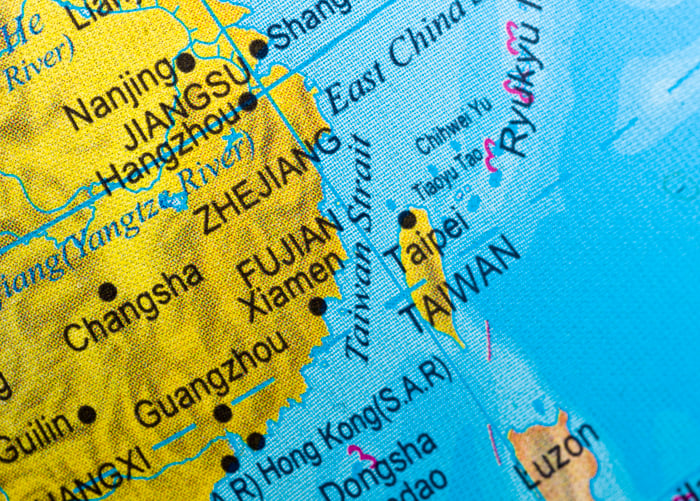
Small Island, Big Footprint
Taiwan plays a pivotal role in the global semiconductor industry, producing approximately 60% of the world’s semiconductor chips. More critically, 90% of advanced chips, those 7 nanometers (nm) or smaller, are manufactured on the island. These advanced chips are essential for running the high-end AI programs that companies like Microsoft utilize for code generation.
The demand for these chips is immense, with companies such as Nvidia, a primary supplier of data center GPUs, relying on Taiwan Semiconductor Manufacturing. Nvidia reportedly controls 92% of the data center GPU market, with Advanced Micro Devices (AMD) as its closest competitor. However, both Nvidia and AMD, along with other major tech players like Apple, Broadcom, and Qualcomm, depend on Taiwan Semiconductor for the manufacturing of their chips, either entirely or partially.
Even advanced components like Nvidia’s Blackwell chip are produced at a Taiwan Semiconductor factory located in Arizona, illustrating the company’s expanding global manufacturing presence.
Creating an Even Bigger Footprint
Taiwan Semiconductor Manufacturing operates as a “pure foundry,” meaning it exclusively manufactures chips under contract without designing them. This specialized model has led to its dominance in the sector, holding a 72% market share as of Q3 2025, far ahead of its nearest competitor, Samsung, which holds 7%.
The company is considered a critical player in the AI and broader tech industry, often described as the “pick-and-shovel” provider for these sectors. To further solidify its global position, Taiwan Semiconductor is expanding its manufacturing capabilities beyond Taiwan. This includes a significant expansion of its factory in Arizona, with plans for six factories and two advanced packaging facilities in the state. Additionally, the company is extending its manufacturing reach to Japan and Germany.
These expansions are occurring without compromising the company’s financial health, which remains exceptionally strong.
Trillion-Dollar Baby
Taiwan Semiconductor Manufacturing is one of only two non-American companies to achieve a market capitalization of $1 trillion or more. Its recent financial performance reflects its substantial size and influence in the market.
In 2025, the company reported revenues exceeding $122.4 billion, marking a 35.9% increase from 2024. Its diluted earnings per share (EPS) saw a 46.4% growth, and it maintains a robust net profit margin of 45%. Looking ahead, Taiwan Semiconductor projects 30% revenue growth for 2026 and anticipates a compound annual growth rate (CAGR) of 25% for revenue through 2029.
Currently trading at a price-to-earnings-to-growth (PEG) ratio of 1.2, the company appears to be valued fairly relative to its projected future earnings. This combination of strong performance, significant growth projections, and reasonable valuation positions Taiwan Semiconductor as a compelling long-term investment.
As AI continues to drive demand for advanced computing power, Taiwan Semiconductor is poised to benefit significantly, likely continuing its growth trajectory by supplying the essential hardware needed for AI-driven software development.
Our Analysis
The increasing integration of AI into software development, as highlighted by Microsoft’s CEO, points to a fundamental shift in the technology landscape. Taiwan Semiconductor Manufacturing stands as a critical enabler of this shift, providing the foundational manufacturing capabilities for the advanced chips that power AI innovation. Its dominant market share, strategic global expansion, and strong financial performance suggest a company well-positioned to capitalize on the ongoing AI revolution.
This content is for informational purposes only and does not constitute financial advice.
Fonte: Nasdaq
