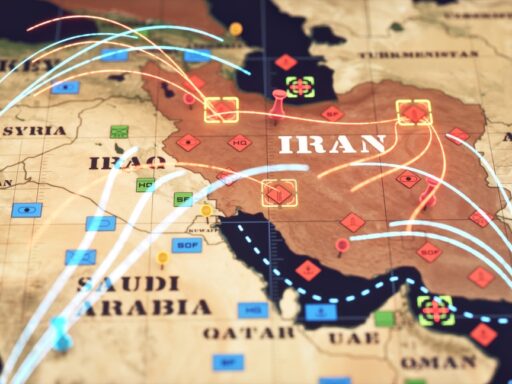
Iran issued an evacuation warning for three major ports in the United Arab Emirates on Saturday, openly threatening a neighboring country’s non-U.S. assets for the first time as its war with the U.S. and Israel entered its third week. The warning targeted ports including the busiest in the Middle East.
Iran claimed that the U.S. had used “ports, docks and hideouts” in the UAE to launch strikes on Iran’s Kharg Island, though no evidence was provided. The nation urged people to evacuate areas where it stated U.S. forces were sheltering.
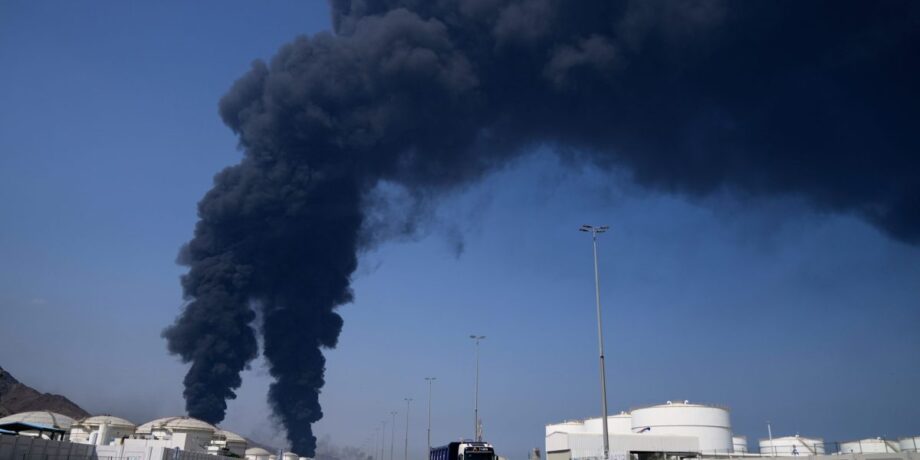
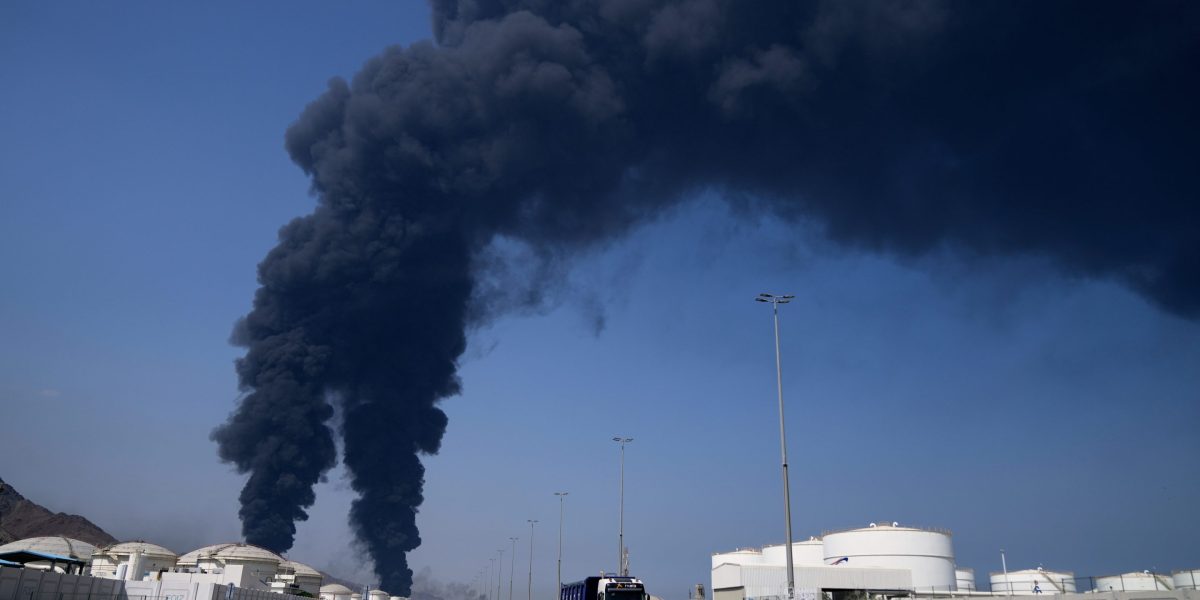
Hours after the threat, there was no immediate sign of an attack on Dubai’s Jebel Ali port or the Khalifa port in Abu Dhabi. However, Associated Press images showed a fire at a third port, in Fujairah, reportedly caused by debris from an intercepted Iranian drone hitting an oil facility.
Iran Claims U.S. Attacked From Near Dubai
Iranian Foreign Minister Abbas Araghchi told MS NOW that the U.S. attacked Kharg Island and Abu Musa Island with low-range artillery from two locations in the UAE: Ras Al-Khaimah and a site “very close to Dubai.” He characterized these actions as dangerous and stated that Iran “will try to be careful not to attack any populated area” there.
Iran has previously fired hundreds of missiles and drones at Arab Gulf neighbors during the conflict. However, the nation asserted it was targeting U.S. assets, even when hits or attempted strikes were reported on civilian infrastructure like airports and oil fields.
On Friday, U.S. President Donald Trump stated that the U.S. had “obliterated” military sites on Kharg Island, which serves as the main terminal for Iran’s oil exports. He warned that oil infrastructure could be targeted next if Tehran continues to interfere with ships’ passage through the Strait of Hormuz, a critical waterway for global oil transit.
Iran’s parliamentary speaker has indicated that strikes against the country’s oil infrastructure would trigger a new level of retaliation.
Amid soaring global anxiety over oil prices and supplies, Trump urged China, France, Japan, South Korea, the U.K., and others to send warships to ensure the Strait of Hormuz remains “open and safe.” Britain responded by stating it was discussing a “range of options” with allies to secure shipping routes.
Iran Reiterates Threat Against U.S.-Linked Oil Assets
On Saturday, Iran’s joint military command reiterated its threat to attack U.S.-linked “oil, economic and energy infrastructures” in the region should the Islamic Republic’s own oil infrastructure be targeted. The semiofficial Fars news agency reported that the strikes on Kharg Island caused no damage to oil infrastructure, stating they instead targeted an air defense facility, a naval base, the airport control tower, and an offshore oil company’s helicopter hangar.
U.S. Central Command confirmed the destruction of naval mine storage facilities, missile storage bunkers, and other military sites. Earlier, Israel announced a new wave of strikes in Iran targeting infrastructure, claiming its air force had hit over 200 targets in the preceding 24 hours, including missile launchers, defense systems, and weapons production sites.
Marines and Assault Ship Deployed to Middle East
A U.S. official revealed on Friday that 2,500 additional Marines from the 31st Marine Expeditionary Unit, along with the amphibious assault ship USS Tripoli, are being dispatched to the Middle East. This deployment significantly increases the U.S. military’s presence in the region, marking one of the largest buildups of warships and aircraft in decades. The official spoke on condition of anonymity due to the sensitive nature of military plans.
Marine Expeditionary Units are equipped for amphibious landings and also specialize in enhancing embassy security, facilitating civilian evacuations, and providing disaster relief. This deployment does not necessarily signal an impending ground operation. The Wall Street Journal initially reported on the Marine deployment.
The Tripoli was observed by commercial satellites navigating near Taiwan, indicating it is more than a week away from waters off Iran. Earlier in the week, the Navy maintained a presence of 12 ships in the Arabian Sea, including the aircraft carrier USS Abraham Lincoln and eight destroyers. The total number of U.S. service members currently in the Middle East remains undisclosed.
Missile Strikes U.S. Embassy in Baghdad
A missile struck a helipad within the U.S. Embassy compound in Baghdad on Saturday. No group immediately claimed responsibility for the attack. The embassy complex, one of the largest U.S. diplomatic facilities globally, has been a frequent target of rockets and drones launched by Iran-aligned militias.
The embassy issued no immediate comment. On Friday, it reinforced its Level 4 security alert for Iraq, cautioning that Iran and Iran-aligned militia groups have a history of targeting U.S. citizens, interests, and infrastructure, and “may continue to target them.”
Meanwhile, Lebanon’s humanitarian crisis has worsened, with over 800 people killed and 850,000 displaced as Israel conducted extensive strikes against Iran-backed Hezbollah militants.
Fonte: Fortune