

CHICAGO — A wide and erratic pattern of severe weather impacted much of the U.S. on Sunday, bringing heavy snow and impassable roads to the Upper Midwest while damaging high winds swept across the Plains. Even Hawaii experienced severe flooding in some areas.


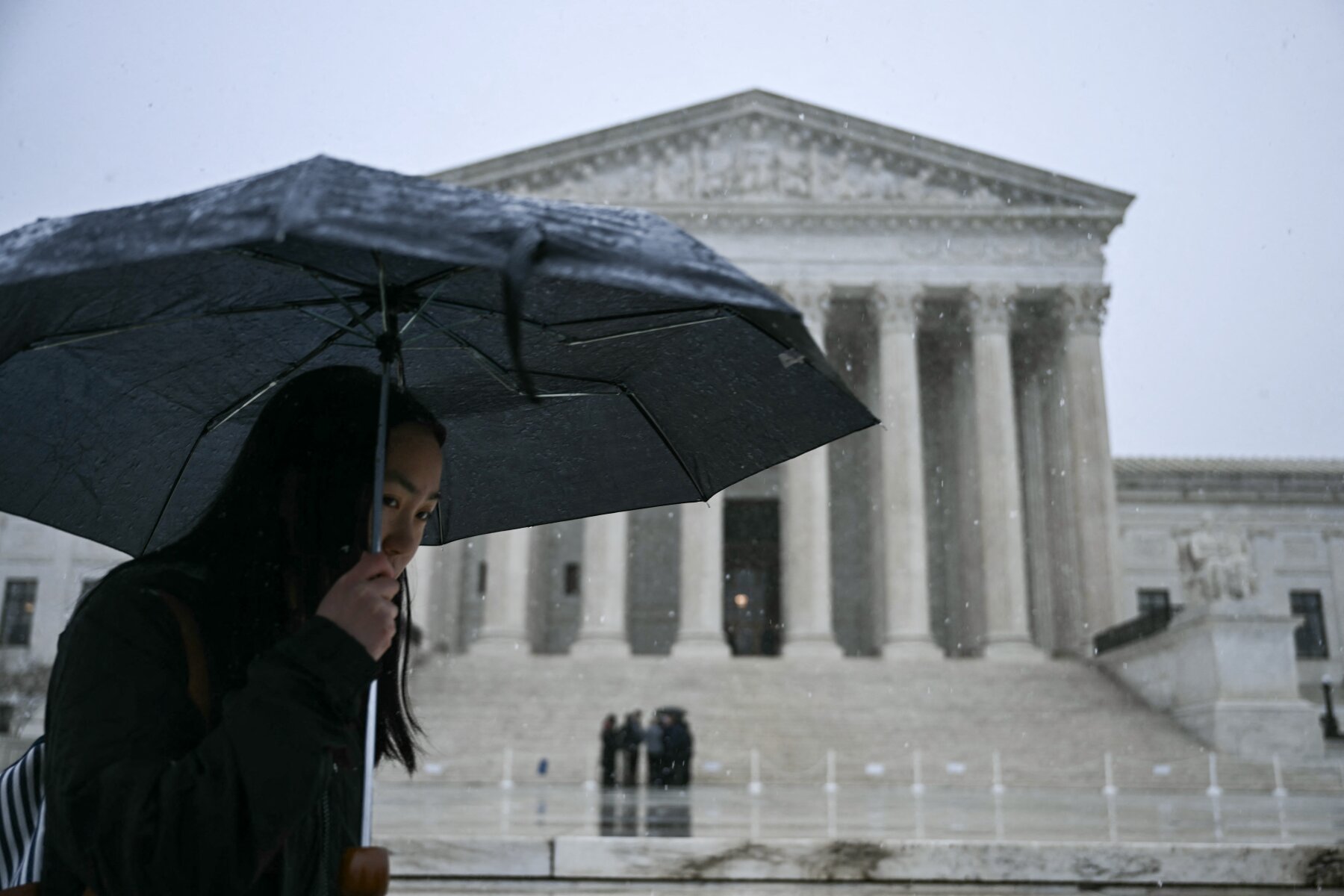

Forecasters warned that portions of the mid-South would face late-day thunderstorms that would spread eastward, posing a threat by Monday to a large swath of the Eastern U.S. The mid-Atlantic states, including Washington, D.C., are most at risk for high winds and tornadoes.
AccuWeather senior meteorologist Tyler Roys stated that successive punches of snow, wind, and severe weather would impact the eastern half of the United States. He noted that beyond the threat to lives and property, major airports could be affected by wind gusts from squall lines, blizzards, or general storm winds.
Midwest Snowfall and Travel Disruptions
As of Sunday morning, National Weather Service reports indicated that portions of Minnesota and Wisconsin received over a foot (30.5 centimeters) of snow. The Minneapolis area was expected to receive several more inches amid blizzard warnings.
Transportation officials in Minnesota, Michigan, and Wisconsin issued warnings for hazardous road conditions, citing worsening visibility and snow-covered roadways. The Wisconsin Department of Transportation advised residents to stay off the roads for safety.
Air travel also faced significant disruptions, with hundreds of flights canceled. The Minneapolis-Saint Paul International Airport reported over 600 cancellations on Sunday, and dozens more flights were scrapped through Detroit.
Roys projected that central Wisconsin and Michigan’s Upper Peninsula could see over 2 feet (61 centimeters) of snow, with isolated higher totals. He added that lower snow accumulations in cities like Chicago and Milwaukee late Sunday and Monday would likely still cause commuter troubles.
Wildfires and High Winds in the Plains
In Nebraska, approximately 30 members of the National Guard were deployed to assist with multiple wildfires across a wide area of range and grassland, according to the state’s Emergency Management Agency. Three of the largest wildfires have damaged well over 900 square miles (2,331 square kilometers), with one, the Morrill County fire, having burned over 700 square miles (1,813 square kilometers).
A fire-related fatality was reported on Friday. Nebraska Gov. Jim Pillen urged residents to adhere to local evacuation orders, anticipating extraordinary winds on Sunday. The weather service issued a high-wind warning for most of Nebraska, with gusts potentially reaching 60 mph (97 kph) amid falling snow. Roys indicated that high winds would affect a region stretching from the U.S.-Mexico border to the Great Lakes, and from Denver eastward to the Appalachian Mountains.
The state’s Emergency Management Agency highlighted the severity of the situation, noting the extensive acreage burned by the wildfires. The governor’s plea for adherence to evacuation orders underscored the potential danger posed by the anticipated wind conditions.
Eastern U.S. Faces Storm Threat
The National Weather Service warned that a line of severe storms with damaging winds was expected to cross much of the Eastern U.S. by late Monday, beginning Sunday afternoon in the Mississippi, Tennessee, and Ohio valleys.
The storm threat was anticipated to reach the Appalachians late Sunday and early Monday before moving toward the East Coast. The weather service reported that severe thunderstorms with widespread damaging winds and several tornadoes were expected during the day Monday.
Areas from parts of South Carolina to Maryland appeared most likely to experience particularly damaging winds Monday afternoon, potentially affecting cities like Raleigh, North Carolina, and Richmond, Virginia, as well as the nation’s capital. A lower, but still increased, risk stretched north to a portion of New York and south to northern Florida.
Hawaii Flooding and Power Outages
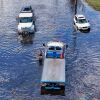
Meanwhile, Hawaii continued to experience heavy rainfall, leading to flooding of farmland and homes, road closures, and the opening of shelters. flash flooding has been a persistent issue in recent days on Maui, Molokai, and the Big Island, with rainfall rates of 1 to 2 inches (2.5 to 5.1 centimeters) per hour overnight, according to the Hawaii Emergency Management Agency.
As of early Sunday, approximately 48,000 electric customers were without power, according to PowerOutage.us. This follows earlier reports of significant power outages in other states due to high winds.
Fonte: NPR
