Marvin, 26, rates his current attractiveness a ‘solid 7/10,’ believing further effort could elevate him to a ‘9/10.’ He identifies specific areas for improvement, including his skin, under-eye bags, and jawline. Marvin is a dedicated ‘looksmaxxer,’ a practice involving rigorous daily routines aimed at enhancing physical appearance.
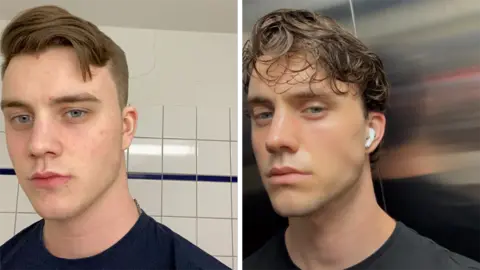
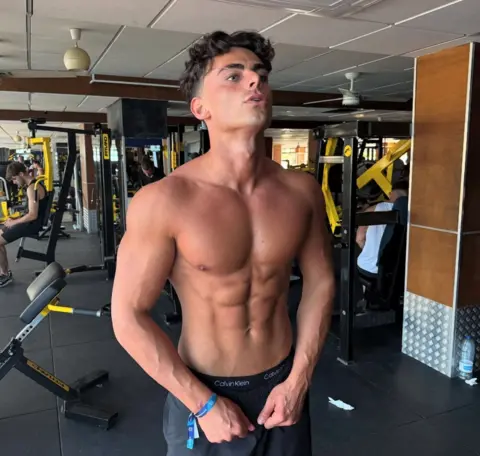
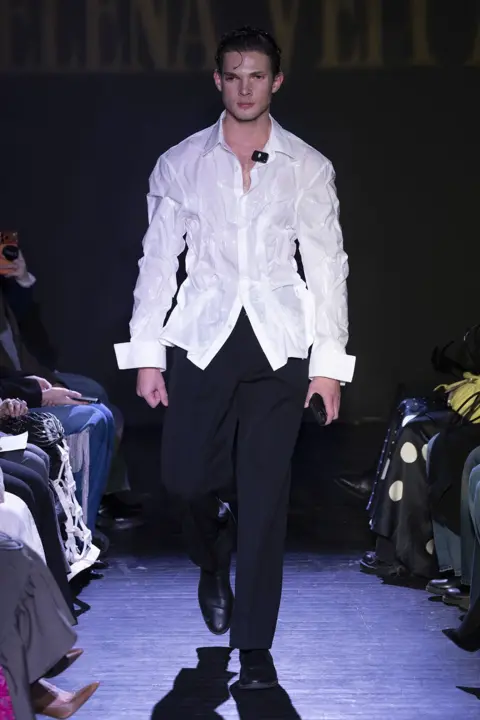
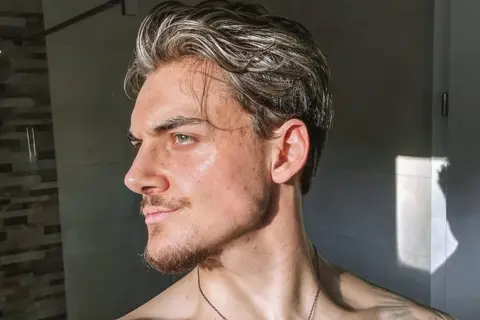
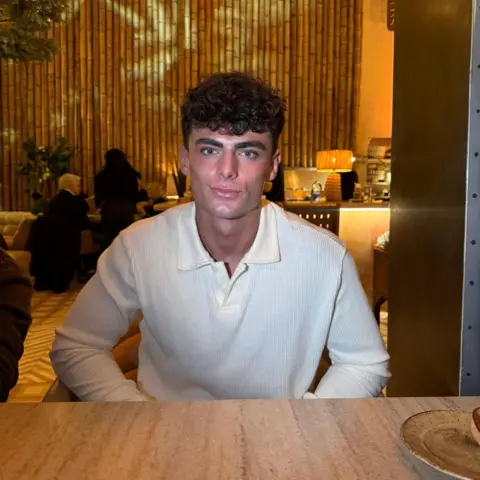
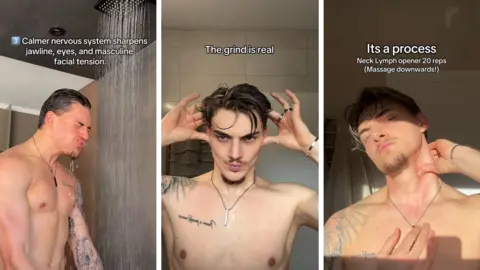
His day begins with an intense gym workout, followed by a home routine that includes alternating hot and cold showers, facial cleansing, and applying a frozen cucumber to reduce puffiness and acne. He also performs facial exercises, often sharing videos with his 35,000 TikTok followers. One such exercise, the ‘Zygopush,’ involves pressing thumbs under the cheekbones to create a more hollowed appearance, while the ‘Hunter squeeze’ aims to shape the eyes into a more ‘wolf-like’ form.
Marvin acknowledges that his regimen might seem unusual to outsiders but is confident it’s helping him achieve his desired aesthetic: a chiseled profile with sharp eyes and a strong jawline. He credits these efforts with transforming him from an ‘unsatisfied carpenter working nine to five’ into an ‘online entrepreneur.’ This pursuit of the ‘perfect face and body’ for a ‘perfect life’ is central to the online world of looksmaxxing.
The Spectrum of Looksmaxxing
Looksmaxxing encompasses a wide range of practices. ‘Softmaxxing’ involves gym workouts and diligent skincare routines. More extreme forms, termed ‘hardmaxxing,’ include procedures like ‘bone-smashing’ or jaw surgery to achieve a more defined, sometimes described as ‘Neanderthal-like,’ appearance. Marvin categorizes individuals who do not actively pursue these aesthetic goals as ‘sub three,’ implying they are ‘not a very good-looking human.’ He utilizes face analysis apps, which have thousands of reviews on app stores, to identify areas for improvement.
Prominent influencers like Braden Peters, known online as Clavicular or ‘giga chad,’ exemplify the ’10/10′ aesthetic. Clavicular claims his appearance is partly due to taking testosterone from age 14 and reshaping his jawbone with a hammer, practices not endorsed by health professionals. The content shared by Clavicular and similar influencers has propelled looksmaxxing from niche subcultures into the mainstream.
Concerns About the Manosphere
Some researchers studying the ‘manosphere’—an ultra-masculine online subculture—view looksmaxxing as a potential gateway to more concerning ideologies. The term originated in online forums for ‘incels’ (involuntary celibates), often characterized by misogynistic rhetoric. Journalist Matt Shea, who has extensively covered toxic masculinity, suggests that influencers like Andrew Tate and Clavicular share an ideology that they leverage for financial gain.
‘They tell young men how worthless they are,’ Shea explains, ‘then offer themselves up as the solution.’ He notes that these influencers sell courses on increasing ‘sexual market value’ (SMV), a metric of attractiveness based on their scale. The underlying logic suggests that a higher SMV increases a man’s chances with women, and any lack of success is attributed to insufficient self-improvement or the woman’s fault. Shea warns that this mindset can become dangerous.
Individual Motivations and Risks
Not all looksmaxxers subscribe to this ideology. Leander, who prefers to be identified as a ‘softmaxxer,’ emphasizes improving his looks for personal satisfaction rather than external validation. After a breakup in 2023, he adopted a routine including five weekly gym sessions, ice-cold face baths, sleeping on his back, and abstaining from pornography, which he believes negatively impacts men’s perception of women. While he doesn’t use a numerical rating system, Leander feels about 80% satisfied with his current appearance.
Leander acknowledges that for those considered ‘non-conventionally attractive’ or ‘sub five out of 10,’ the path can be challenging, potentially leading to feelings of isolation, though he does not condone incel culture. Tom Thebe, 23, became involved in looksmaxxing after experiencing hair loss at 21, which significantly impacted his confidence. He now uses prescription treatments like finasteride and minoxidil, alongside gym and skincare routines. He also injects peptides, such as GHK-Cu for skin and hair, and Melanotan II for tanning. The Medicines Health and Regulatory Authority (MHRA) has warned that most unregulated peptides are tested only on animals and are not considered safe or effective for human use.
Tom notes that extreme looksmaxxing practices can negatively influence younger individuals’ perceptions of ideal appearance. Anda Solea, a researcher at the University of Portsmouth studying the manosphere’s societal infiltration, highlights the spectrum of looksmaxxing. While caring for one’s health and fitness is positive, risks arise when health is jeopardized for aesthetic improvement. Powerful algorithms can expose young men to manosphere content, pressuring them to engage in looksmaxxing or face ridicule. Solea questions whether unmet romantic expectations, after significant self-enhancement efforts, could lead some men to blame women.
Ultimately, as the experiences of Marvin, Leander, and Tom illustrate, motivations for looksmaxxing can stem from both self-perception and the desire for external validation.
Fonte: BBC News