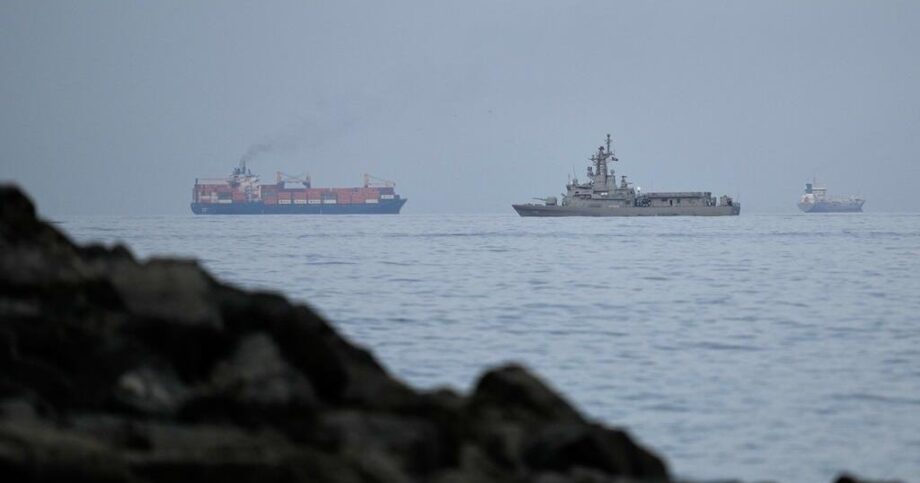
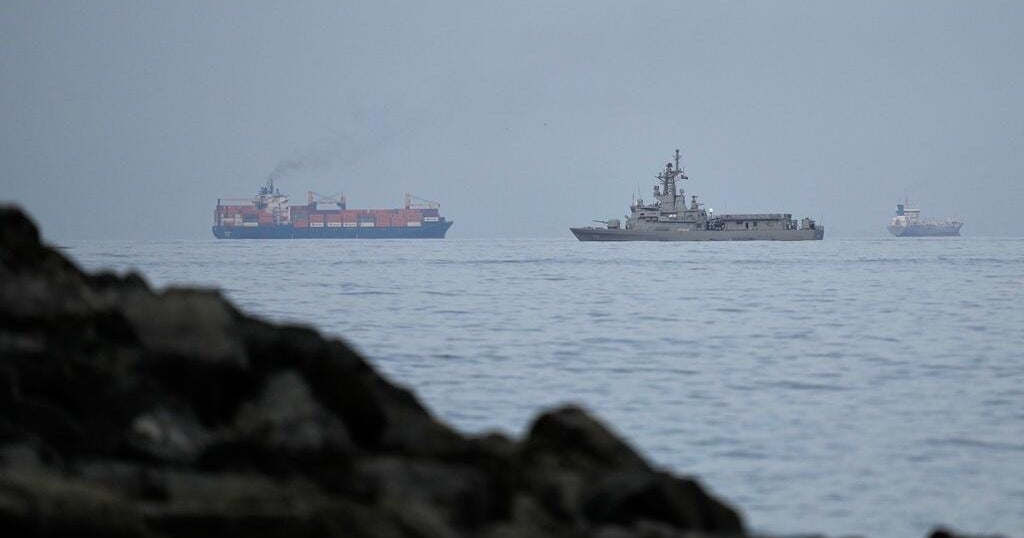
The Trump administration is considering a significant military operation to escort oil tankers through the Strait of Hormuz, a critical maritime chokepoint, amid escalating tensions with Iran. This potential undertaking, which experts suggest could be in its preparatory stages, aims to resolve the paralysis gripping oil markets due to the conflict.
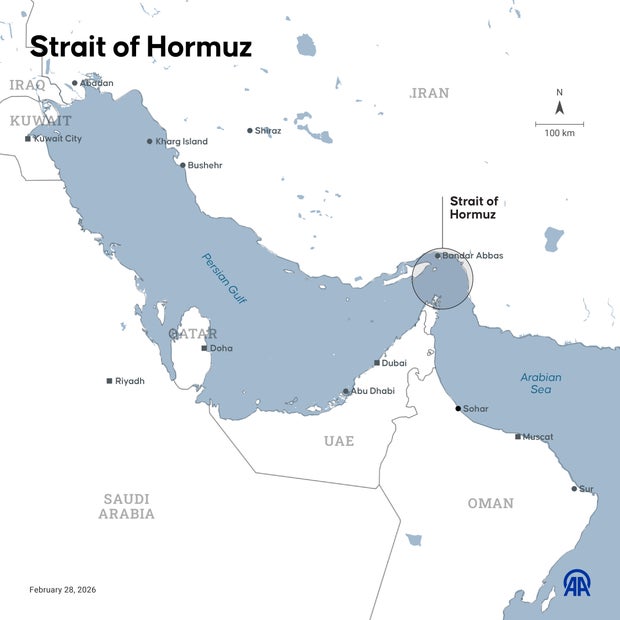
Over the past two weeks, more than a dozen attacks have been reported against oil tankers and other cargo ships in the Persian Gulf and the Arabian Sea. Iranian officials have openly threatened vessels transiting the Strait of Hormuz, a waterway responsible for approximately 20% of global oil transport. Consequently, oil tankers have largely ceased transiting the strait, leading major Arab oil exporters to cut production and causing oil prices to surge by about 40%.
President Trump stated that the U.S. Navy and its partners will escort tankers if necessary, though administration officials indicate readiness is still pending. Energy Secretary Christopher Wright suggested the escorts could commence by the end of the month, while Treasury Secretary Scott Bessent indicated they would begin as soon as militarily feasible.
What Needs to Happen for Escorts to Start?
Military experts describe a potential escort mission as a two-phase operation. The first phase involves preparing the battlefield by reducing Iran’s capacity to attack ships. This might already be underway, with U.S. Central Command reporting strikes on Iranian anti-ship missile sites, drone manufacturing facilities, and mine-laying ships.
Reducing Iran’s military stockpiles is crucial to ensure incoming fire is manageable and can be reliably intercepted. While escorts could theoretically begin now, doing so earlier increases risk. Placing U.S. Navy ships near the Iranian coastline could quickly escalate tensions.
Experts at the Center for Strategic and International Studies believe the U.S. military is preparing by degrading Iran’s capabilities to lay mines and strike targets. The Navy likely aims to enter the Strait only when confident that threats have been significantly diminished by airstrikes.
How Would Escorting Ships Work?
The decision on when to initiate escorts rests with U.S. Central Command, balancing the need to open the Strait with acceptable risk levels. An escort operation could involve the Navy establishing staging areas at either end of the contested zone, potentially limited to the Strait itself or extending into the Persian Gulf.
A U.S. Navy ship, or one from a partner nation, would then escort groups of commercial vessels. This operation would likely be supported by air cover, surveillance, mine-sweeping capabilities, and a quick reaction force to counter attacks. Initial convoys might face targeted attacks, with the U.S. aiming to identify and neutralize Iranian firing positions once revealed.
The escort operation could involve an international coalition, potentially including countries like France. The U.S. Navy’s involvement might require a significant portion of its fleet, drawing parallels to a past escort operation in the 1980s.
What Threats Could Iran Pose?
The Strait of Hormuz, at its narrowest point just 21 miles wide, presents a chokepoint Iran could exploit. If the U.S. Navy and partners escort commercial vessels, Iran is expected to engage them.
Potential threats from Iran’s arsenal include naval mines, anti-ship cruise missiles, drones, fast-attack boats operated by the Revolutionary Guards, and remote-controlled explosive boats. U.S. officials have indicated Iran may be signaling its intent to lay mines, though current evidence suggests the Strait is not impassable due to mines, with Iran’s actions being the primary impediment to transit.
While Iran possesses fewer large mine-laying ships, it has numerous smaller boats capable of deploying mines, making complete eradication difficult. Some experts remain skeptical about the effectiveness of an escort operation, citing Iran’s potential for hidden missile and drone stockpiles. They also note the significant naval resources required for such an operation.
Has This Happened Before?
The U.S. has previously conducted escort operations in the Strait of Hormuz. In 1987, during the latter stages of the Iran-Iraq War, the U.S. Navy escorted Kuwaiti tankers to protect them from Iranian mines and missiles.
This operation, involving dozens of U.S. ships, faced challenges. In one instance, the USS Samuel B. Roberts struck an Iranian mine, prompting retaliatory strikes. Later, the U.S. mistakenly shot down an Iranian passenger plane, resulting in significant loss of life. The war concluded with a ceasefire. A similar outcome, either through a ceasefire or Iran ceasing its actions, could mark the end of a renewed escort mission.
Fonte: CBS MoneyWatch